
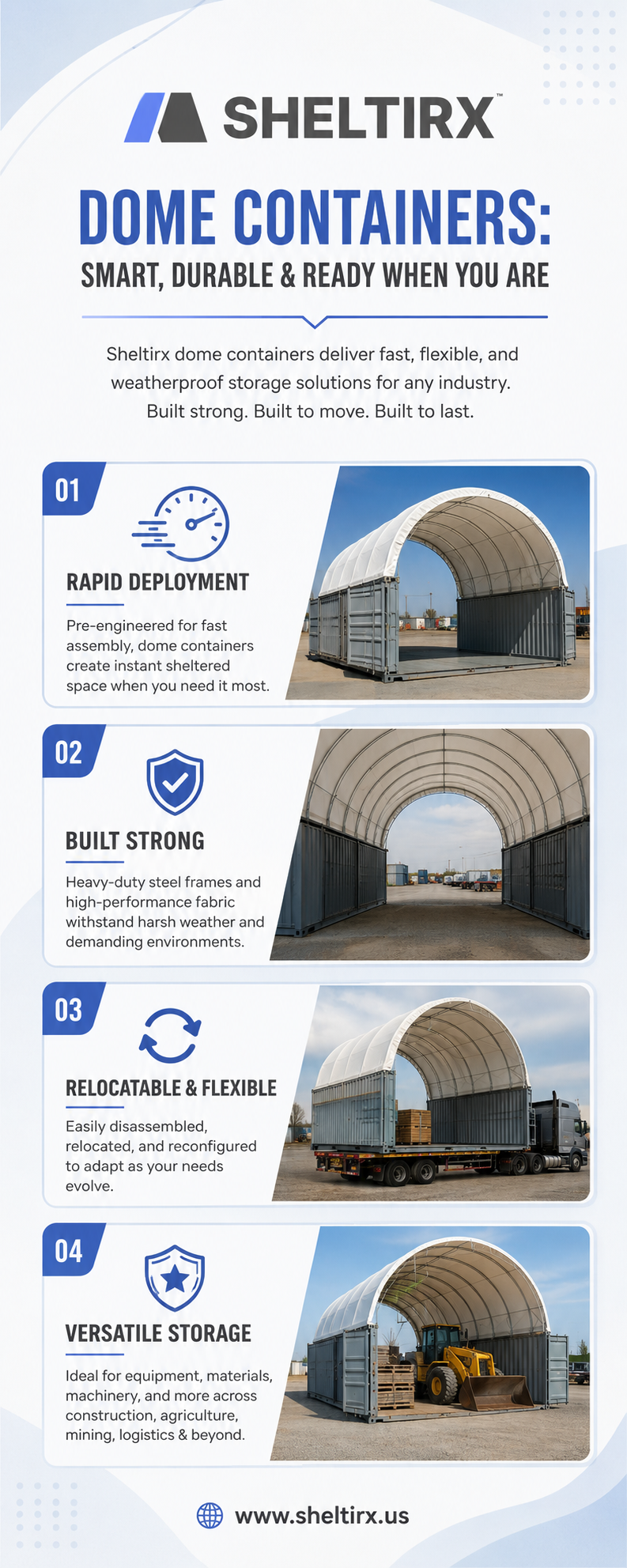
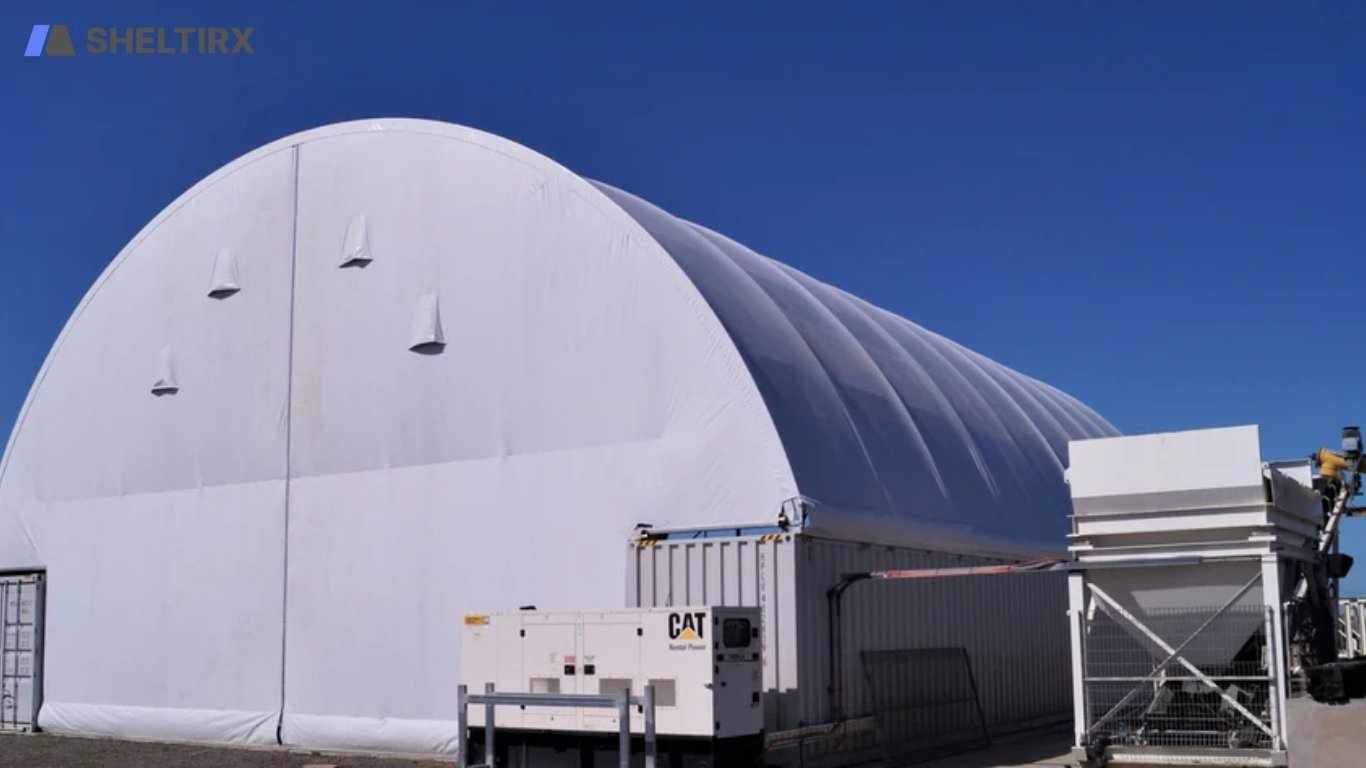
When industrial operations outgrow their footprint, expanding yard capacity usually triggers a logistical nightmare. Traditional brick-and-mortar builds or permanent steel structures demand heavy capital expenditure, months of city permitting, and permanent ground disturbance. For sites requiring rapid, heavy-duty overhead protection, installing a temporary or semi-permanent shipping container canopy has become the gold standard for adaptive site management. By leveraging existing on-site ISO containers as structural foundation walls, industrial operations can rapidly secure expansive, weather-protected clear-span spaces without the long-term commitments of permanent construction.
However, selecting the right canopy system isn’t as simple as purchasing a one-size-fits-all fabric cover. Industrial environments demand strict adherence to safety, material longevity, and load compliance. Cheap, unengineered alternatives frequently fail under sudden wind gusts or snow loads, risking catastrophic asset damage and worker liability.
To ensure your investment delivers maximum return on investment (ROI) and total operational safety, this guide breaks down the critical engineering, material, and structural parameters you must evaluate before choosing an industrial canopy system.
1. Structural Integrity: Single vs. Double-Truss Frameworks
The backbone of any reliable fabric structure is its steel framework. Depending on your geographic location and site requirements, you must choose between single or double-truss designs.
Single-Truss Frames: Best suited for smaller spans (under 40 feet) and regions with mild weather conditions. These utilize single steel tubes curved into arches. While highly cost-effective, they lack the structural rigidity required for massive clear spans.
Double-Truss Frames: For heavy industrial environments, double-truss engineering is non-negotiable. These feature webbed, dual-tube steel configurations that drastically increase resistance to twisting and buckling. If your site handles heavy machinery overhead or operates in regions prone to heavy storms, double-truss systems provide the necessary safety margins.
Always ensure the frame utilizes hot-dip galvanized steel. Industrial yards are hotbeds for rust and chemical corrosion. Galvanization creates a thick, protective zinc barrier that guarantees the steel arches remain structurally sound for decades, even in coastal or high-moisture zones.
2. Fabric Engineering: Choosing the Right Covering Material
The fabric membrane is your first line of defense against environmental hazards. Industrial buyers often make the mistake of choosing low-grade polyethylene tarps that degrade under intense UV exposure within 24 months. For long-term industrial reliability, your selection should be based on specialized fabric coatings engineered for specific operational environments.
For general industrial storage, Heavy-Duty PVC is highly recommended due to its excellent tear resistance, structural flexibility, and long lifespan under everyday wear and tear. If your site is located in an area with high pollution or intense solar exposure, fabrics featuring a PVDF Coating offer superior UV stability along with self-cleaning properties that resist dirt and grime accumulation over time. For the most extreme industrial environments, a premium PTFE Membrane provides a chemically inert, non-combustible shield that can withstand decades of harsh sun, freezing temperatures, and severe weather conditions without losing structural form.
Beyond material type, always verify that the fabric is UV-stable and carries a verified fire-rated certification. On active job sites where welding, grinding, or heavy machinery operations take place, a fire-retardant fabric cover prevents localized sparks from turning into full-scale industrial accidents.
3. Navigating Building Codes and Environmental Loading
A canopy shelter is only as good as its site-specific engineering data. Before deploying a fabric structure, project managers must verify local zoning and structural mandates.
Critical Compliance Note: Many jurisdictions classify fabric container covers as temporary structures, which can significantly simplify the permitting process. However, temporary does not mean unregulated.
To safeguard your assets and crew, the canopy system must be engineered to meet area-specific wind and snow loads in compliance with the International Building Code (IBC). Experienced engineering providers, such as Sheltirx, design building systems tailored to these specific local codes, supplying necessary load data, site plans, and structural drawings to ensure seamless local approvals and zero structural failures in the field.
4. Operational Alignment: Sizing and Customization
To generate genuine utility out of your canopy, the dimensions must match your operational workflows, not just your container layouts.
Clearance Height: Ensure the apex height accounts for your tallest equipment. If you are operating large excavators, dump trucks, or high-mast forklifts under the shelter, you may need a container canopy that sits on double-stacked container walls to maximize vertical clearance.
Apertures and End Walls: Will the shelter remain open-ended for continuous drive-through logistics, or do you require fully enclosed end walls with heavy-duty cargo doors to shield sensitive inventory from driving rain and wind?
Stock vs. Custom Timelines: Standard container yards using classic 20ft or 40ft setups can often leverage stocked, pre-engineered canopy kits that can be delivered to a job site within 10 working days, radically cutting down operational downtime.
Summary: Maximizing Industrial Asset Protection
Investing in a shipping container canopy is one of the fastest ways to scale your storage footprint, optimize outdoor assembly yards, or establish weatherproof maintenance hubs. By prioritizing hot-dip galvanized steel frameworks, high-grade fire-retardant fabrics, and certified IBC wind/snow load engineering, you protect your inventory, secure your workforce, and ensure a rapid ROI that permanent brick-and-mortar alternatives simply cannot match.

Write a comment ...