
There's a conversation happening on job sites, in agricultural co-ops, and across manufacturing facilities that rarely makes it into formal reports — the growing frustration with traditional storage buildings. I've watched companies spend six figures on a permanent structure, only to move operations two years later and leave that building behind like an anchor. I've also seen businesses try to cut corners with flimsy portable shelters that buckle under the first real storm.
The storage infrastructure problem is real, and it's more nuanced than most vendors want to admit. So let's have an honest conversation about two of the most commonly compared solutions: the increasingly popular container shelter and the conventional permanent storage building.
This isn't a promotional breakdown. It's the kind of assessment I'd give a colleague asking me over coffee: practical, balanced, and grounded in how these structures actually perform when put to work.
What Exactly Is a Container Shelter?
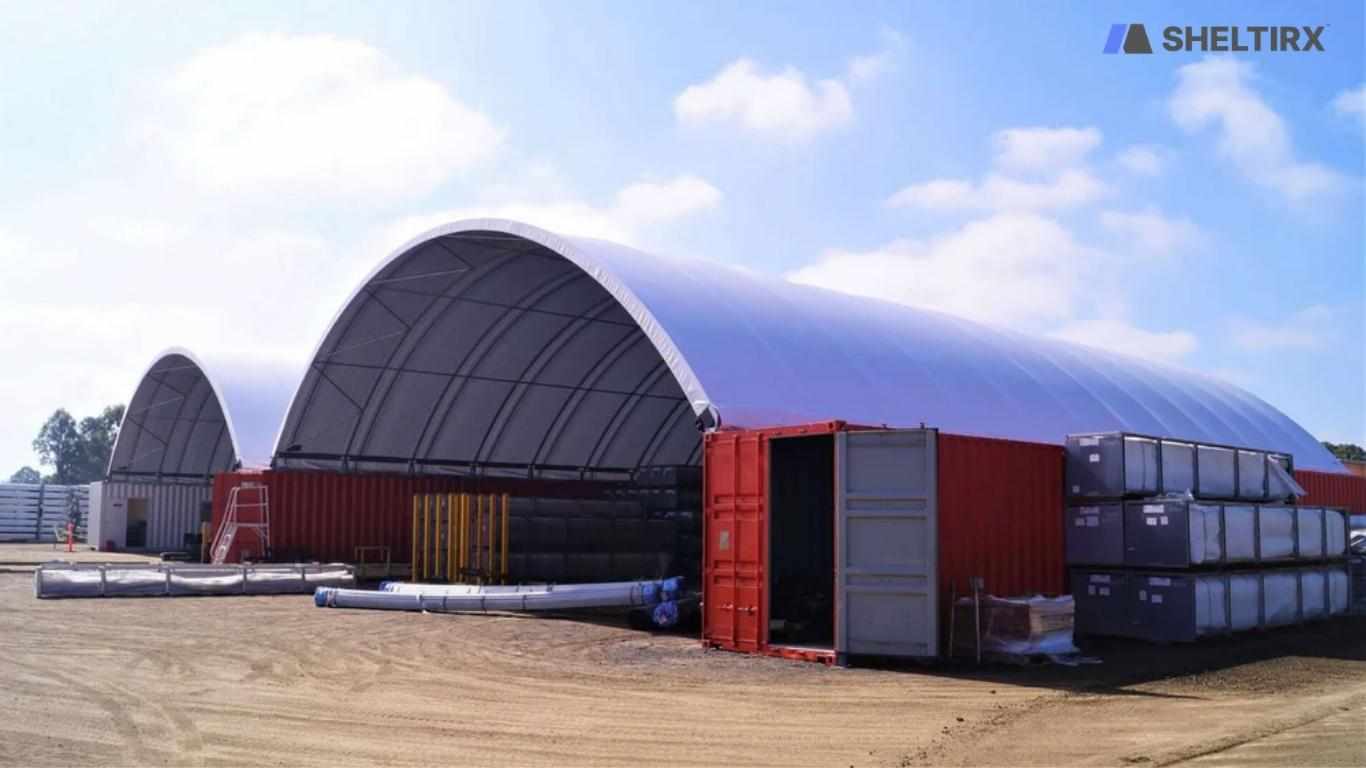
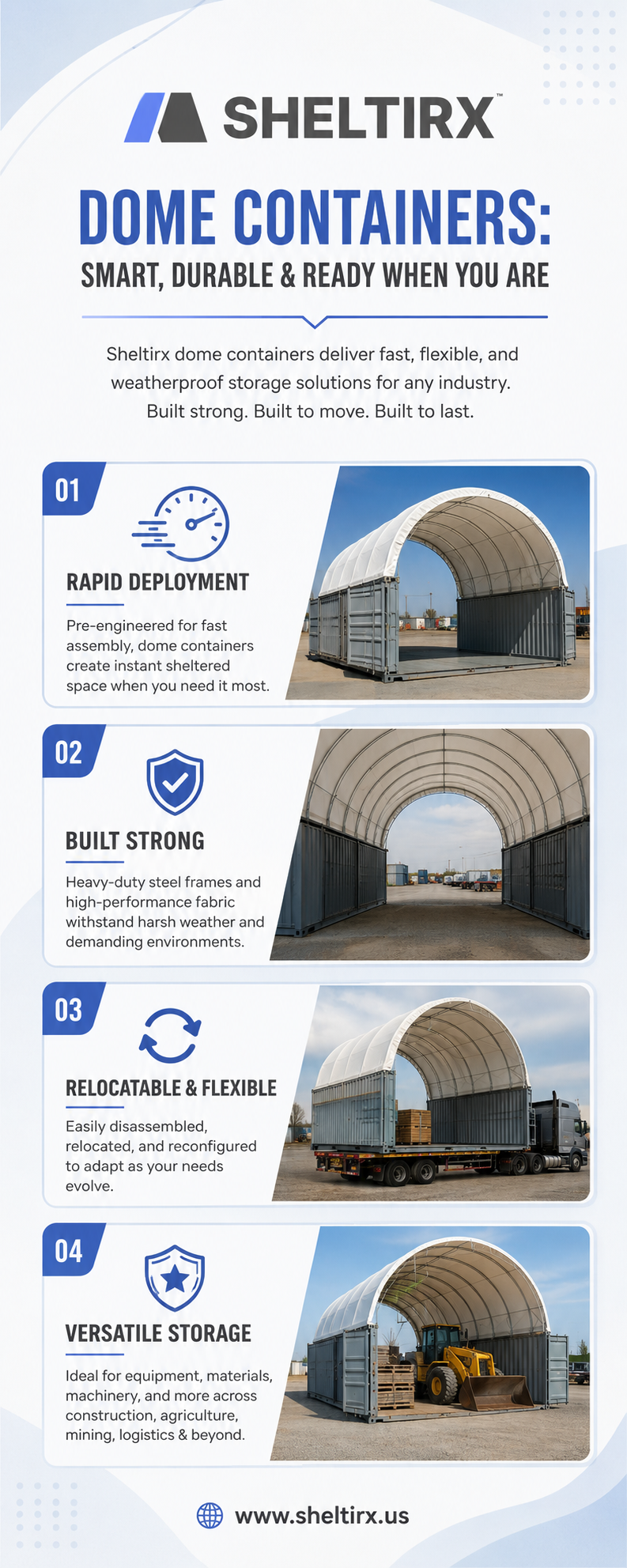
A container shelter — in its most common industrial form — is a fabric or tensioned membrane structure designed to span across one or more intermodal shipping containers, which serve as the foundation and side walls. The containers provide the structural base, while a heavy-duty fabric or polycarbonate roof system covers the open span between them.
The appeal is intuitive. You're combining two proven assets: the structural rigidity and security of a steel shipping container with the covered, weather-protected space of a traditional shelter. The result is a hybrid system that offers meaningful protection for equipment, materials, and inventory without requiring a concrete foundation, building permits (in most cases), or a months-long construction timeline.
A 40ft container shelter, specifically, uses standard 40-foot ISO containers as its lateral supports — the same containers that move cargo across oceans. That's not a coincidence. These boxes are engineered to stack eight units high under full load. Using them as structural anchors for a shelter roof is, from a purely engineering standpoint, a conservative application of a massively over-built asset.
What Are Traditional Storage Buildings?
Traditional storage buildings encompass a wide range — from prefabricated steel-frame structures to masonry block buildings and pre-engineered metal buildings (PEMBs). In the industrial and commercial context, the most common type is the steel-frame metal building, typically built on a poured concrete slab with gutter systems, insulation packages, and roll-up doors.
These buildings are permanent by design. They require site preparation, foundation work, utility rough-ins, and often a building permit process that can stretch from weeks to several months depending on the jurisdiction. Once built, they are — almost by definition — immovable.
For many applications, that permanence is exactly what's needed. For others, it becomes a liability.
The Real Comparison: Where It Actually Matters
Cost
Let me be direct here: traditional storage buildings almost always cost more upfront, and often significantly so.
A standard metal building in the 40x60 foot range — which is roughly comparable to a container shelter system spanning two 40-foot containers — will typically run between $35,000 and $80,000 or more depending on the region, site conditions, and finish specifications. That range doesn't include site prep, foundation work, or permits, which can easily add another $15,000 to $40,000 on top.
A container shelter system in a similar size range typically falls well below that, especially when the end user already owns or can lease the shipping containers. The fabric or panel roof system itself represents the primary capital cost, and ongoing expenses are modest — occasional membrane inspection and tensioning, essentially.
The cost comparison shifts somewhat when you look at multi-decade ownership. A well-built metal building, properly maintained, can serve a facility for 40 or 50 years. Container shelter systems have improved dramatically, but the fabric components typically carry 10–20 year warranties, meaning eventual replacement is part of the lifecycle cost.
Still, for most buyers doing the math honestly, the upfront capital savings of a container shelter system are difficult to ignore.
Installation Time
This is where container-based systems genuinely shine, and where the gap with traditional buildings is widest.
A traditional metal building, even a prefabricated one, requires site preparation, foundation pouring and curing (typically 28 days minimum for full concrete strength), erection, and finishing. A realistic timeline from contract to occupancy runs 3 to 6 months — and that's assuming no permit delays, no weather interruptions, and a builder with available capacity.
A container shelter system, by contrast, can often be fully installed in a matter of days once the containers are positioned and the site is reasonably level. There's no curing time. The containers themselves serve as the foundation. Some modular storage buildings of this type are delivered and erected within a single week.
For operations that need covered storage quickly — disaster response staging, seasonal harvest overflow, a construction site equipment yard — that difference isn't just convenient. It's operationally critical.
Flexibility and Portability
Here's where the philosophical difference between these two solutions becomes most apparent.
A traditional building is rooted. Its value is tied to the land beneath it, and moving it is — in practical terms — not an option. If your operation relocates, your building stays. If your storage needs shift dramatically, you're largely stuck with the footprint you built.
Portable shelter systems built on containers offer a fundamentally different model. The containers can be repositioned with standard lifting equipment. The roof structure, depending on design, can often be disassembled, transported, and re-erected at a new location. This isn't quick or effortless, but it is genuinely possible — a distinction that matters enormously to businesses with evolving operational footprints.
For companies with multiple sites, growing agricultural operations, or construction contractors who move from project to project, this relocatability represents real financial value. You're not leaving an asset behind when you move.
Durability and Weather Resistance
This is a point where some container shelter advocates tend to oversell, so let me offer a measured take.
High-quality fabric shelter systems — particularly those using heavy-duty polyethylene or PVC-coated polyester membranes with UV inhibitors — perform well in most weather conditions. They handle snow loads when properly engineered, resist wind according to their rated specifications, and modern fabrics hold up against UV degradation far better than products from even 15 years ago.
However, they are not identical to a steel building. In extreme weather environments — frequent heavy snow loads in mountainous regions, high-velocity hurricane-prone coastal areas, or environments with significant hail frequency — a traditional metal building offers a more substantial physical barrier. Steel roofing and wall panels are more impact-resistant than fabric, full stop.
That said, for the vast majority of U.S. applications — including most agricultural, construction, and light industrial settings — a properly specified container shelter system provides more than adequate protection. The key phrase is "properly specified." Buyers should always verify the wind and snow load ratings against their local building codes and site conditions, regardless of which solution they choose.
Maintenance
Traditional metal buildings have their own maintenance demands: periodic repainting to prevent rust, attention to roof seams, caulking around penetrations, and managing gutter systems. Left unattended, a metal building can develop corrosion issues that become expensive to remediate.
Container shelter systems require different maintenance — primarily inspecting the fabric for abrasion, ensuring tensioning hardware stays properly torqued, and periodically checking the condition of the containers themselves, especially at connection points and on the container floors if goods are being stored inside.
Neither system is maintenance-free. In terms of annual maintenance burden, they're broadly comparable, though the specific tasks differ.
Long-Term Value
For owned real estate with a long time horizon, traditional buildings add to property value in a way that a portable structure doesn't. A permanent metal building appears as an improvement on the property assessment, can increase the property's market value, and may be financed through conventional real estate instruments.
Container shelter systems, depending on how they're assessed locally, may or may not add comparable property value. They may, however, depreciate differently for tax purposes — sometimes more advantageously depending on how they're classified.
The honest answer is that long-term value depends heavily on what you're comparing it against and what your operational needs actually are. Both can deliver strong ROI in the right context.
Real-World Use Cases That Tell the Story
Construction: A general contractor working on a multi-year infrastructure project needs secure equipment storage on-site. A traditional building would require permitting and a foundation they'll never use again. A container shelter system is erected in days, keeps equipment dry and secured, and gets relocated to the next major project when this one wraps up. The math here almost always favors the container-based solution.
Agriculture: A mid-sized grain and hay operation in the Midwest needs additional covered storage for equipment and large bales. They have the acreage but not the capital for a new permanent structure. Repurposed containers they already own for grain handling become the structure's walls, and a spanning roof system covers the gap. Total cost is a fraction of a new building, and the system is installed before harvest season.
Light Manufacturing: A small manufacturer needs outdoor equipment protection for raw material staging and finished goods awaiting shipment. A container shelter system set up adjacent to their existing facility works perfectly, can be expanded modularly, and doesn't require a major capital appropriation.
Emergency Response: A government agency setting up a disaster response logistics hub needs covered storage for supplies and equipment, and they need it in place within 72 hours. There is no traditional building option that meets that timeline. Portable shelter systems do.
When a Container Shelter Is the Right Choice
You're a good candidate for a container shelter system if most of the following describe your situation:
You need covered storage within weeks, not months
Your operations may relocate within the next 5 to 10 years
You already own or can economically lease shipping containers
Your site doesn't require a permanent foundation (or you prefer to avoid one)
You're working within a tighter capital budget
You need the flexibility to expand or reconfigure the shelter footprint
For anyone actively evaluating options, it's worth taking time to explore available container shelter options to understand what current systems actually look like in terms of engineering, sizing, and configuration — the category has evolved considerably.
When Traditional Buildings Make More Sense
There are legitimate situations where a traditional storage building is genuinely the better call:
You own the property permanently and want to add long-term real estate value
You're in a climate with extreme and frequent severe weather (heavy snow country, hurricane zones)
You need a conditioned space — heated and cooled — with built-in mechanical systems
Your use case requires a fully enclosed, insulated, and finished interior
You need a structure that meets commercial building codes for occupied space
Your time horizon exceeds 30 years and you want a maintenance-stable structure
In these scenarios, the capital premium for a traditional building is usually justified by what it provides.
The Honest Verdict
After spending two decades watching businesses make infrastructure decisions — some brilliant, some expensive mistakes — my honest assessment is this: container shelter systems have matured into genuinely excellent solutions for a wide range of industrial and commercial storage needs. They're not a compromise. For many applications, they're the smarter choice.
Traditional buildings still make sense for permanent facilities where long-term property investment, conditioned space, or extreme weather resilience are priorities. They're not obsolete. But they're also not the default answer they once were.
The worst decision is choosing either based on habit rather than analysis. A construction company that automatically builds a permanent metal building for every site need is probably overspending. A manufacturing facility that chooses a fabric shelter when it needs a fully conditioned and code-compliant finished space is underbuilding.
Ask the questions that matter for your specific situation: How long will you be in this location? What's your actual budget — capital and operational? What weather does your region actually throw at you? Do you need this covered in three months or three weeks?
The answers will usually make the right choice fairly obvious.
Conclusion
The debate between container-based shelters and traditional storage buildings isn't one that resolves cleanly in favor of either side across all scenarios. What has changed, and changed meaningfully, is that container shelter systems are no longer the "alternative" option for buyers who can't afford permanent construction. For the right use cases, they're the primary option — the one that makes the most operational and financial sense from the start.
The industry has come a long way from the early iterations of fabric-over-pipe structures that gave portable shelter systems a mixed reputation. Today's engineered systems are purpose-built, rated for real weather conditions, and backed by warranties that should give any serious buyer confidence.
Do your homework. Spec the right system for your actual conditions. And don't let the familiarity of a traditional building blind you to how much the alternatives have improved.
Frequently Asked Questions
Q: Can a container shelter be used as a permanent structure, or is it only for temporary use?
A: This depends on the specific design and how it's classified locally. Many container shelter systems are engineered for long-term, semi-permanent installation. Some jurisdictions classify them as temporary structures (which can actually be advantageous for permitting), while others may require building permits if they remain in place beyond a certain period. It's worth checking with your local building department before installation.
Q: How does a container shelter hold up in heavy snow or high winds?
A: Reputable container shelter systems are engineered to specific wind and snow load ratings — typically conforming to ASCE 7 or similar standards. The key is matching the product's rated specifications to your actual local conditions. A shelter rated for 90 mph winds and a 20 psf snow load may be perfectly adequate in Indiana but insufficient in Montana or coastal Florida. Always ask for the engineering documentation and verify it against your local requirements.
Q: Do I need a building permit for a container shelter?
A: In many jurisdictions, container-based shelter systems are classified as temporary structures and may not require a traditional building permit. However, this varies significantly by municipality, county, and state. Some localities treat anything with a foundation — even containers — as a permanent structure subject to permitting. Others have specific provisions for portable shelter systems. The safe approach is always to call your local building or planning department before purchasing and installing.
Q: What is the typical lifespan of the fabric cover on a container shelter?
A: High-quality fabric membranes used in industrial container shelter systems typically carry manufacturer warranties of 10 to 20 years, with realistic service lives potentially extending beyond that in moderate climates. UV exposure, physical abrasion, and extreme weather conditions are the main factors that affect longevity. The containers themselves, being steel, can last considerably longer with basic maintenance. So the lifecycle cost model typically involves one fabric replacement over the operational life of the system.
Q: How does the total cost of a container shelter compare to a traditional metal building over a 15-year period?
A: Over a 15-year period, a container shelter system typically remains cost-competitive even after factoring in potential fabric replacement and maintenance costs. The lower upfront capital, combined with avoided foundation and permitting costs, creates a meaningful initial advantage. If the operation relocates during that period, the container shelter system preserves more asset value since it can move with the business. Traditional buildings generally win on a 30+ year horizon for owned property, primarily due to property value addition and the avoidance of fabric replacement costs.


Write a comment ...